Teach It to Learn It: Why Your Child Should Become the Teacher
By Xogos Gaming · November 2, 2026
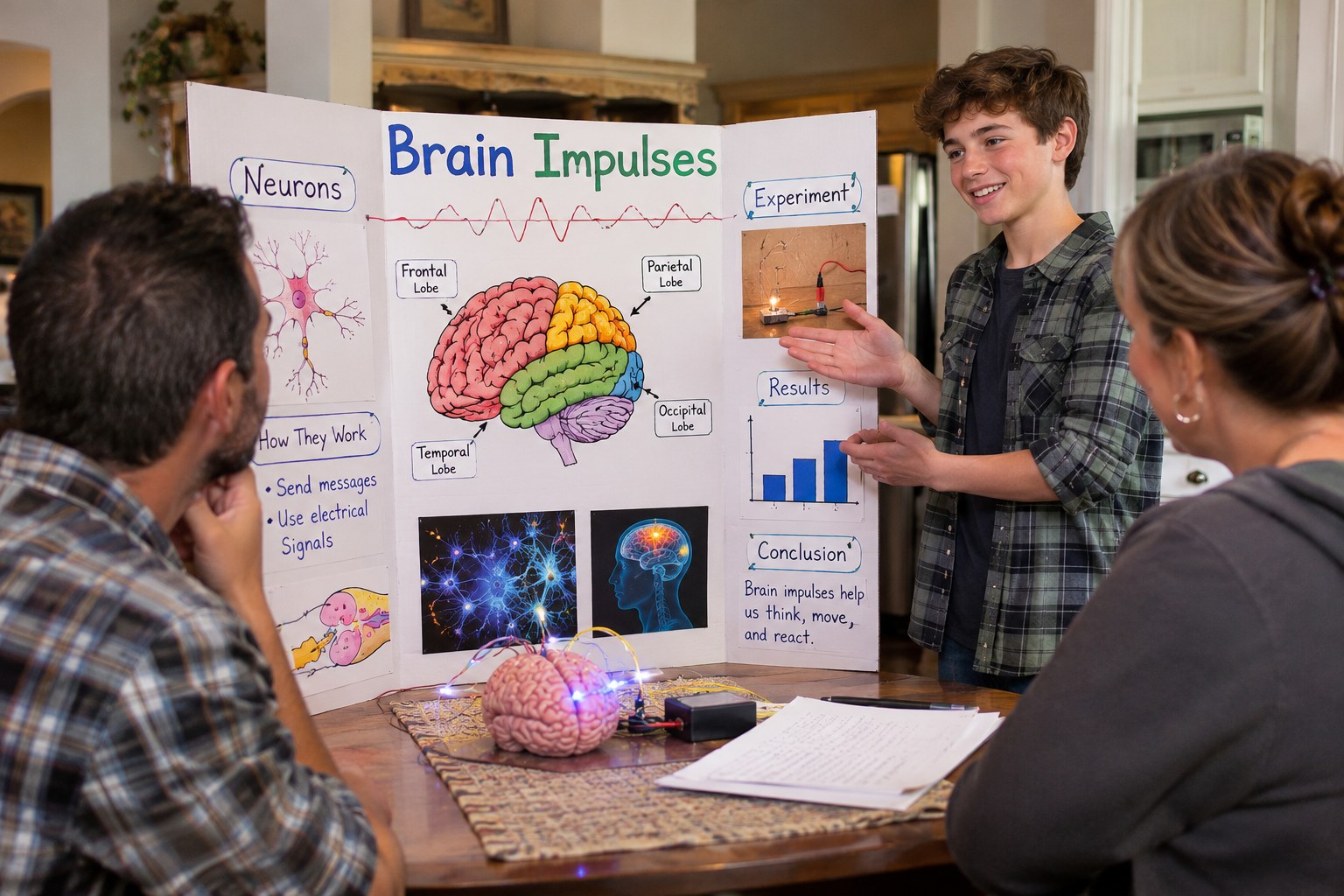
Imagine your child sitting at the kitchen table, explaining to their younger sibling how the human heart pumps blood through the body. They draw a diagram, describe the chambers, and answer a few unexpected questions. Suddenly, their sibling asks, "But why does the blood have to go through the lungs first?" Your child pauses. They thought they understood the circulatory system, but now they realize there is something they cannot quite explain. So they return to their lesson, find the answer, and come back with a better explanation. Without realizing it, they have just participated in one of the most valuable learning exercises available: teaching someone else.
For homeschooling parents and educators, this simple activity can transform an ordinary lesson into a deeper learning experience. Instead of asking students only to read, listen, memorize, and complete assignments, we can encourage them to become teachers themselves. When children know they will have to explain something to another person, they often approach learning differently. They pay closer attention, organize information more carefully, and begin thinking about the questions someone else might ask.
Educational researchers call one part of this phenomenon the protégé effect: the idea that preparing to teach, or taking responsibility for another learner's understanding, can improve the teacher's own learning. Teaching also encourages retrieval practice, elaboration, self-explanation, and metacognition—thinking about what we know and what we still need to understand.
What Happens in the Brain When Students Teach?
Learning is not simply about placing information into the brain. It is about creating meaningful connections between ideas and being able to retrieve and apply those ideas later. When a student explains a historical event, scientific principle, or mathematical equation to someone else, they must do more than recognize the correct answer on a worksheet.
They have to retrieve information from memory, arrange it into a logical sequence, translate complicated concepts into understandable language, and connect new information to knowledge their audience already possesses. These activities require active mental effort, which can strengthen understanding and make weaknesses in knowledge easier to recognize.
For example, a student studying the American Revolution might remember that the Boston Tea Party occurred in 1773. But when asked to teach their family why the protest happened, they must explain taxation, representation, British colonial policy, and the growing conflict between Britain and its American colonies. The date becomes part of a much larger story rather than an isolated fact.
The same principle applies to science, mathematics, language arts, and career education. A child who can explain why an experiment works, how to solve a fraction problem, or what causes a disease has demonstrated a more
meaningful level of understanding than someone who can merely repeat a memorized answer.
Importantly, the benefits do not come from speaking alone. They come from the mental work involved in preparing, retrieving, explaining, questioning, and correcting understanding.
Two Scientific Studies That Show Why Teaching Helps Students Remember
The research provides encouraging evidence that teaching others is an effective learning strategy, particularly when students know beforehand that they will be teaching. Although it is not scientifically accurate to promise that students will remember a fixed percentage of everything they teach, controlled studies have measured meaningful improvements in comprehension and retention.

Students Who Taught Remembered More After One Week
In 2013, researchers Logan Fiorella and Richard E. Mayer published The Relative Benefits of Learning by Teaching and Teaching Expectancy in Contemporary Educational Psychology.
Students learned about the Doppler effect, a scientific principle explaining how the observed frequency of sound or light changes with movement. Some studied normally, others prepared to teach, and another group prepared and delivered a recorded explanation.
The students who actually taught performed significantly better than the ordinary-study group both immediately and after one week. The preparation-only group's advantage was significant immediately but not after a week. These are standardized effect sizes rather than percentage increases, and the experiment involved a specific lesson rather than every school subject.
For parents, the lesson is important: asking a child to explain a subject aloud may do more for lasting understanding than simply asking them to read it again.
Five Fun Ways Parents Can Turn Their Students Into Teachers
1. Make Your Student the Teacher for Ten Minutes
After a lesson, give your child ten minutes to teach the family what they learned. Provide a whiteboard, paper, or household objects as teaching aids. Encourage them to explain the subject without reading directly from their notes. For younger children, a three-minute lesson is a great beginning.
2. Let Your Child Create the Quiz
Instead of parents always asking the questions, have students create five questions about their lesson and quiz their siblings or parents. Challenge them to explain why each answer is correct. Writing questions forces students to identify important information and distinguish between understanding and memorization.
3. Have Them Demonstrate a Science Experiment
Let students select a safe experiment, such as testing which objects float, investigating plant growth, or observing a baking soda and vinegar reaction. Have them explain their prediction, demonstrate the experiment, and describe the scientific principle. Parents can ask what might happen if one variable changes.
4. Host a Weekly Family Learning Night
Once a week, invite each child to present something interesting they studied. One might explain the fall of Rome, another how interest accumulates in a savings account, and another how insects communicate. Encourage questions and discussion, but avoid making it a high-pressure performance.
5. Create a Student-Led Video Lesson
Have your child record a three-to-five-minute explanation of something they learned. They could demonstrate a math problem, describe a historical event, or explain a career. Let them watch their recording and identify one thing to improve. The video can remain private and be shared only with family or a teacher.
Don't Be Afraid When Your Child Says, "I Don't Know"
One of the greatest benefits of teaching is discovering what we do not understand. When students encounter questions they cannot answer, parents have an opportunity to encourage investigation instead of supplying the solution immediately.
A child explaining the digestive system might be asked why stomach acid does not normally digest the stomach itself. A student describing ancient Egypt might be asked how workers moved enormous stone blocks. An aspiring entrepreneur teaching about business might be asked why a profitable company can still run out of cash.
These questions create curiosity and provide a reason to return to books, lessons, experiments, and other reliable resources. When students research an answer and return to teach it, they practice the habits of lifelong learners.
Parents can also help students revisit their lessons a few days later. Teaching once is valuable, but teaching again after a delay gives children another opportunity to retrieve information and see what they remember.
From Learning to Teaching: Bringing the Adventure Home With Xogos Education
At Xogos Education, we believe learning should inspire students to discover, investigate, explore, and share their knowledge with others. Through the educational platform at www.XogosGaming.com, students can explore educational games and free elective classes covering fascinating subjects ranging from history and science to personal finance and medical career preparation.
Imagine a student taking a class about human anatomy and then explaining to their parents how the heart works. Another student explores ancient civilizations and creates a family presentation about the inventions that changed human history. A teenager studying personal finance could teach their siblings how to create a budget, save money, and understand compound interest. Someone exploring medical careers could share what different healthcare professionals do and why their work matters.
The adventure does not have to end when students finish a lesson or turn off their computers. In fact, that may be when one of the most valuable parts of learning begins. Maybe they will even try a game or two that solidifies these lessons.
Our goal at Xogos is to make education engaging enough that students want to explore these subjects, discover new interests, and share what they have learned. By combining educational games, adventurous elective courses, and opportunities to apply knowledge outside the digital world, we hope to help parents and educators turn students from passive recipients of information into curious, confident learners.
The next time your child finishes a lesson, don't simply ask, "What did you learn today?" Instead, ask, "Can you teach me something you learned today?"
You may be surprised how much they know—and how much more they discover when given the opportunity to become the teacher.