Why the Microschool Model Is Growing in Homeschooling Today
By My Learning Source · August 3, 2026
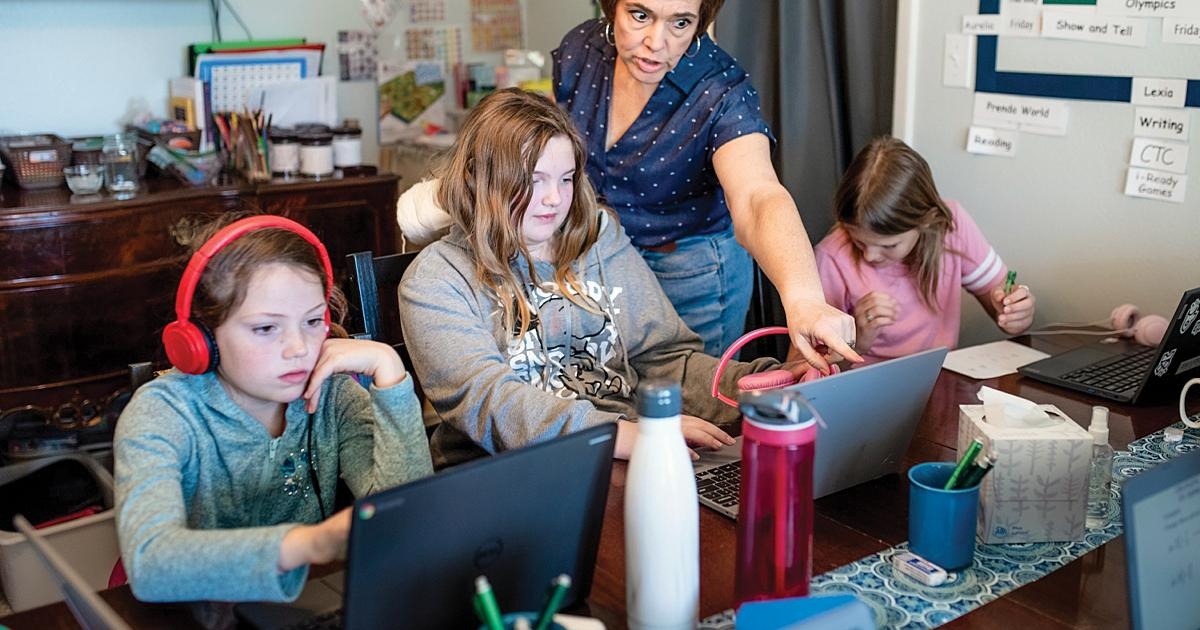
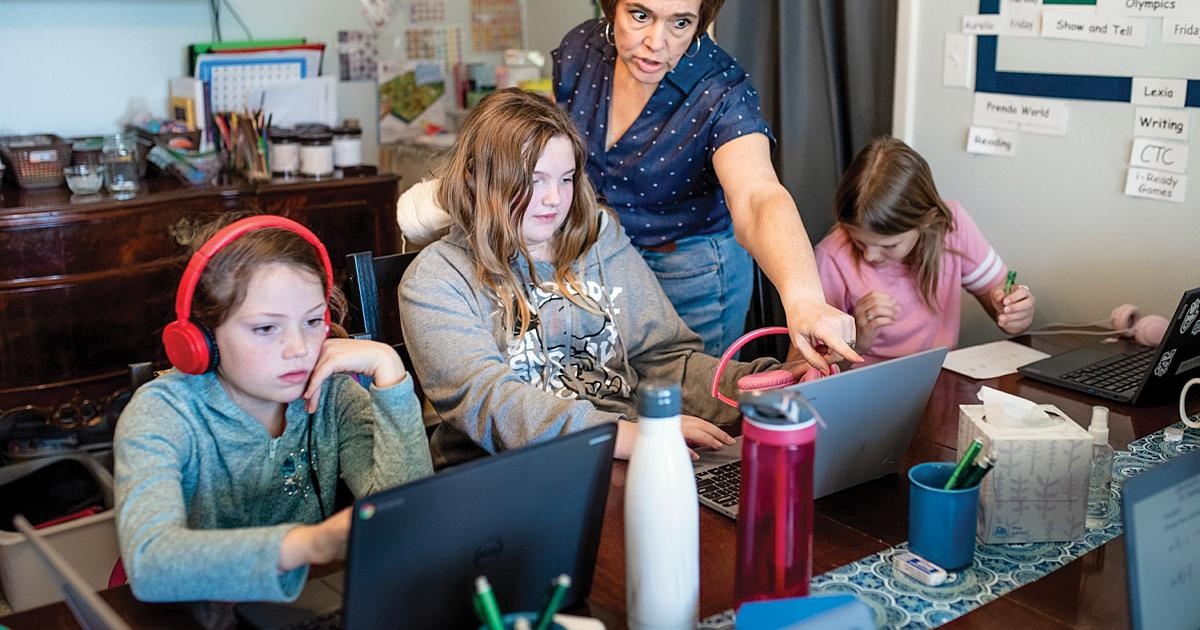
Over the past decade, homeschooling has undergone a remarkable transformation. What was once viewed primarily as parents teaching their children around the kitchen table has expanded into a wide variety of educational models designed to meet the unique needs of every student. One of the fastest-growing of these models is the microschool. Across the country—and especially in states like Florida, where school choice has expanded significantly—families are discovering that microschools provide an exciting balance between the flexibility of homeschooling and the structure of a traditional classroom.
The growth of microschools reflects something parents have known for years: every child learns differently. Rather than forcing students into a one-size-fits-all educational system, microschools offer an environment where learning can be more personal, interactive, and responsive to individual needs.
A Different Way to Learn
A microschool is generally a small learning community that serves a limited number of students, often ranging from just a handful to a few dozen learners. Some meet in homes, churches, community centers, or learning studios, while others operate virtually through live online instruction. Regardless of the format, the defining characteristic is the small size of the learning environment.
Unlike large classrooms where one teacher may be responsible for twenty-five or thirty students, microschools typically allow instructors to spend considerably more time with each learner. Students are less likely to disappear into the crowd and more likely to receive individualized attention when they need it.
This personalized approach often creates stronger relationships between teachers, students, and parents.
Why Families Are Choosing Microschools
Parents choose homeschooling for many different reasons. Some seek greater academic freedom. Others want to customize their child's education around individual strengths and interests. Many appreciate the opportunity to reinforce family values while providing a safe learning environment.
Microschools complement these goals by offering professional instruction without sacrificing flexibility.
Students can often enjoy:
- Smaller class sizes.
- Greater interaction with instructors.
- More opportunities to ask questions.
- Flexible scheduling.
- Individualized pacing.
- Stronger peer relationships.
- Increased parent involvement.
For many families, microschools provide the best of both worlds. Students benefit from collaborative learning while parents retain significant influence over their children's education.
Florida Has Become a Leader in Educational Choice
Florida has emerged as one of the nation's leaders in educational choice. Through expanded scholarship opportunities and education savings programs, many homeschooling families now have greater access to educational services, curriculum, tutoring, enrichment programs, and specialized instruction.
This environment has encouraged educational innovation.
Families are no longer limited to choosing between public school, private school, or traditional homeschooling. Instead, they can combine resources that best fit their children's needs.
Microschools have become one of the most popular options because they fit naturally within this flexible educational landscape. Parents can tailor educational experiences without giving up the personal involvement that attracted them to homeschooling in the first place.
Personalized Learning Improves Student Success
Educational research consistently demonstrates that students do not all learn at the same pace or in the same way.
Some students grasp mathematical concepts quickly but require additional support in writing.
Others thrive through visual demonstrations while some prefer reading independently or participating in hands-on activities.
Personalized learning recognizes these differences.
Instead of asking every student to master the same material in exactly the same manner and on the same schedule, individualized instruction allows teachers to adjust methods, pacing, and support based on each student's progress.
Research has shown that personalized instruction can improve academic achievement, increase student confidence, and strengthen motivation because learners experience more frequent success and receive support tailored to their needs.
Engagement Leads to Better Learning
Students learn more effectively when they are actively engaged.
Cognitive science has repeatedly shown that active participation improves attention, strengthens memory formation, and encourages deeper understanding. Students retain information more effectively when they discuss ideas, solve problems, conduct experiments, collaborate with peers, and apply knowledge to authentic situations rather than simply listening to lectures or completing repetitive worksheets.
Engaged learners ask questions.
They become curious.
They seek answers.
Learning becomes something they participate in instead of something that simply happens to them.
Microschools often emphasize this kind of active learning because smaller class sizes allow teachers to involve every student in meaningful discussions and projects.
Small Communities Build Confidence
One of the greatest strengths of microschools is the learning community itself.
Students who may feel overwhelmed in larger classrooms often become more willing to participate when surrounded by a smaller group of familiar classmates. Teachers have greater opportunities to understand each student's personality, learning preferences, and academic challenges.
This familiarity allows instructors to:
- Recognize when students need additional help.
- Encourage participation from quieter learners.
- Adapt lessons more quickly.
- Celebrate individual progress.
- Foster stronger friendships among students.
Research has found that students who experience positive relationships with teachers and classmates often demonstrate higher levels of engagement, stronger academic persistence, and improved emotional well-being.
A sense of belonging matters.
Parents Remain Essential Partners
Perhaps one of the most appealing aspects of the microschool model is that parents remain active participants in their children's education.
Rather than handing complete responsibility to a school system, homeschooling families continue making important educational decisions while benefiting from additional instructional support.
Parents know their children better than anyone else.
They understand their interests.
They recognize their struggles.
They celebrate their successes.
When parents and educators work together as partners, students benefit from consistent expectations, stronger communication, and a shared commitment to helping each child succeed.
This collaborative relationship has become one of the defining characteristics of many successful microschool programs.
Preparing Students for a Changing Future
The workforce today's students will enter is changing rapidly.
Employers increasingly value communication, collaboration, critical thinking, adaptability, creativity, and lifelong learning alongside academic knowledge.
Microschools often provide environments where these skills develop naturally through discussion, teamwork, project-based learning, and individualized instruction.
Students learn not only academic content but also how to communicate effectively, solve problems collaboratively, manage their own learning, and think independently.
These abilities prepare them for college, careers, entrepreneurship, and life beyond the classroom.
One Example of the Microschool Philosophy
One organization applying these principles is Rayvencrest, which has built its educational approach around the belief that every child deserves a learning experience tailored to his or her individual needs. Rather than expecting all students to progress at the same pace, Rayvencrest emphasizes personalized learning that recognizes each student's strengths, interests, and preferred learning style.
The organization also places a strong emphasis on engagement. Instead of relying primarily on passive instruction or repetitive assignments, its programs encourage students to participate actively in the learning process. This reflects a growing body of educational research showing that students retain more information and develop stronger critical-thinking skills when they are directly involved in meaningful learning experiences.
Rayvencrest's virtual microschool model also embraces the advantages of small learning communities. Smaller class sizes allow instructors to know students personally, adapt instruction more effectively, encourage participation, build stronger relationships, and provide individualized feedback that would often be difficult to achieve in larger classrooms.
Perhaps most importantly, Rayvencrest views parents as educational partners rather than observers. The organization supports homeschooling families while recognizing that parents remain central to educational decision-making. By combining personalized instruction, engaging learning experiences, small learning communities, and meaningful parent involvement, Rayvencrest demonstrates why the microschool model continues to gain momentum among homeschooling families throughout Florida and across the nation.