Your Child Doesn't Hate History—They May Hate the Way History Is Being Taught
By Historical Conquest LLC · November 13, 2026

Your Child Doesn't Hate History—They May Hate the Way History Is Being Taught
Is History Really Boring, or Are We Teaching It That Way?
“I hate history!” How many parents have heard those words from their children? Perhaps your student struggles to remember historical dates, complains about reading another chapter, or finishes a worksheet only to forget everything by the following week. Before deciding your child simply doesn't enjoy history, consider another possibility: maybe history isn't the problem. Maybe it's the way history is being taught.
History is filled with extraordinary stories of courage, betrayal, invention, exploration, war, sacrifice, and discovery. These are the same ingredients that make movies, novels, and video games exciting. Yet somehow, when we put those stories into textbooks and reduce them to names, dates, and multiple-choice questions, we can drain the excitement right out of them. Students begin associating history with memorization rather than discovery. And when learning becomes nothing more than completing assignments, curiosity often disappears.
I know this because I was one of those students.
The College Assignment That Changed My Life
When I graduated from high school, I nearly hated history. Not because I disliked the stories of the past, but because of how they had been presented to me. I struggled to remember the names, dates, and events that teachers expected me to memorize. I could study for a test, earn a reasonable grade, and forget much of the information shortly afterward. History seemed like a subject I simply had to survive rather than something I could enjoy.
Then I went to college, and something unexpected happened. It wasn't a history professor who changed my perspective. It was an English professor.
One day, he assigned our class a simple writing project: create a one-page essay, double-spaced, in 12-point font, describing a product that could change the world and could realistically be developed from a college dorm room. That was it. I could have written the paper, received my grade, and moved on. Instead, I started thinking about two things: I hated learning history the way it had been taught, but I absolutely loved games.
What if I combined the two?
That single question changed everything. I began imagining a collectible card game with the excitement of Pokémon and strategic elements reminiscent of Risk, except every card would feature historical people, civilizations, locations, and events. Suddenly, history wasn't something I had to memorize. It became something I wanted to investigate because I needed that information to develop my game.
The idea followed me into other college classes. Marketing assignments helped me consider how to promote the game. Mathematics helped me think through its mechanics and systems. Even AutoCAD gave me opportunities to develop aspects of the product. Instead of completing assignments simply to receive a grade, I was using what I learned to build something I cared about. That sense of ownership helped transform me from a B-and-C student toward earning straight A's.
That one-page essay eventually became Historical Conquest. But the most important lesson wasn't about creating a business. It was discovering what can happen when students are given an opportunity to take ownership of their education.
What Research Tells Us About Engaging Students
Educational research supports the importance of moving beyond passive instruction. A major 2014 meta-analysis led by Scott Freeman, published in Proceedings of the National Academy of Sciences, examined 225 studies comparing traditional lecturing with active learning in undergraduate science, technology, engineering, and mathematics courses. Researchers found that students in active-learning environments performed approximately 6 percentage points better on examinations, while students in traditional lecture courses were about 1.5 times as likely to fail. Although this research focused on college STEM education rather than homeschool history specifically, it provides strong evidence that actively participating in learning can improve academic outcomes. Additional research by psychologists Henry Roediger and Jeffrey Karpicke has demonstrated that retrieving information from memory helps strengthen long-term retention. The lesson for parents is that reading and listening are valuable, but students also need opportunities to discuss, explain, apply, practice, and revisit what they learn. Importantly, research has not established that matching instruction to a child's supposed fixed "learning style" improves achievement; offering varied activities is valuable because different approaches can serve different learning goals.
Five Ways to Make History More Engaging at Home
1. Turn Historical Events into Stories, Not Lists of Dates
Instead of beginning with a date and a list of facts, begin with a problem. Imagine telling your child, "You're George Washington, and your army is freezing, hungry, and losing hope. The British have more resources, and your soldiers are wondering whether they should go home. What would you do?" Suddenly, the student is thinking about leadership, survival, and difficult decisions rather than simply memorizing when something happened. Once your child becomes interested in the story, introduce the historical details and explain what actually occurred. Ask students to predict outcomes, defend their choices, and consider what might have happened differently. History becomes more memorable when students understand the people and decisions behind the events.
2. Connect History to Something Your Child Already Loves
Every child has interests that can become doorways into learning. If your child loves video games, explore the history of military strategy, civilizations, or technological inventions. If they love cooking, investigate the foods eaten in ancient Rome or colonial America and prepare a historically inspired meal. If they enjoy building, challenge them to construct a medieval castle, Roman aqueduct, or ancient Egyptian settlement. If they enjoy art, have them illustrate a historical event or design a museum exhibit. The goal is not to replace historical knowledge with entertainment but to use existing interests to motivate students to investigate the subject more deeply.
3. Replace Some Worksheets with Hands-On Projects
A worksheet might help students review information, but a project can challenge them to use it. Instead of answering ten questions about medieval castles, ask your child to design a castle capable of surviving an attack. They will need to research walls, towers, defensive positions, water supplies, and siege weapons. Instead of writing another report about ancient civilizations, have them construct a model city and explain why its inhabitants settled near particular rivers or trade routes. Projects like these can bring history together with mathematics, science, engineering, geography, and writing. The key is to require students to explain the historical reasoning behind what they create.
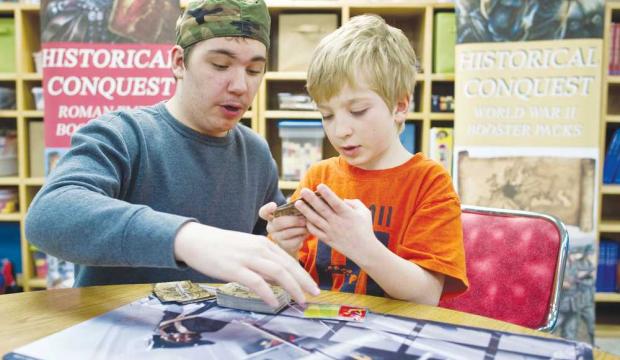
4. Use Games to Encourage Strategy, Discussion, and Repetition
Games can provide opportunities for students to encounter historical information repeatedly while making decisions and interacting with others. A historical strategy game might encourage a child to recognize a famous general, investigate an ancient civilization, or remember why a particular location mattered. Competition can motivate students to pay attention, but the educational value comes from what happens during and after gameplay. Ask questions such as, "Who was that historical figure?" "Why was this civilization important?" or "Did this battle really happen the way the game represents it?" Repeated encounters, followed by discussion and recall, help turn entertainment into meaningful learning.
5. Give Students Ownership of Their Education
This is perhaps the most important lesson I learned from my college English professor. Give your child a project they can make their own. Instead of assigning every detail, offer a meaningful objective and let them decide how to accomplish it. One student might create a documentary about the American Revolution, another might design a board game, and another might write a historical adventure story. Set clear expectations for research, accuracy, and what they must demonstrate, but allow flexibility in how they present their understanding. When students feel that their work belongs to them, they may become more willing to invest time, overcome challenges, and pursue additional knowledge. A simple assignment might even inspire an interest that follows them into other subjects—or, as happened to me, into an entirely different career.
Bringing History to Life with Historical Conquest and the Adventure Box Curriculum
My experience inspired the creation of Historical Conquest because I wanted students to discover the excitement in history that I had missed growing up. Our physical card game combines collectible historical figures, events, and civilizations with strategic gameplay, encouraging students to encounter historical information through competition, discussion, and repeated play. But we also recognized that no single teaching method reaches every student in every situation. That is why we developed the Historical Conquest Adventure Box Curriculum, bringing together a variety of educational experiences inspired by the seven commonly discussed learning-style categories: visual, auditory, verbal, physical or kinesthetic, logical, social, and solitary. Students can explore history through illustrated materials and maps, stories and discussions, reading and writing, hands-on crafts, strategic games, group activities, and independent study. These are not scientifically established categories that permanently define how children learn; rather, they are useful reminders to offer different ways to engage with the same subject. Each monthly Adventure Box brings together a history textbook, themed Historical Conquest cards, hands-on activities and crafts, and additional digital learning resources. Our objective is to help students experience history in more than one way, giving them opportunities to understand it, use it, revisit it, and remember it.
I often think about that English professor and the one-page essay that changed my life. He didn't give me an elaborate curriculum or a complicated assignment. He simply gave me an opportunity to create something meaningful, and that opportunity awakened an interest I never knew I had.
Perhaps your child doesn't hate history either. Perhaps they simply haven't discovered the activity, story, project, or game that makes it come alive.
The goal of education should never be simply to get students through another worksheet or test. It should be to awaken a curiosity that makes them want to keep learning long after the assignment is finished.