What is Doughie?
By Doughie · October 21, 2026 · STEM, Therapy, Vendor Spotlight, Sensory
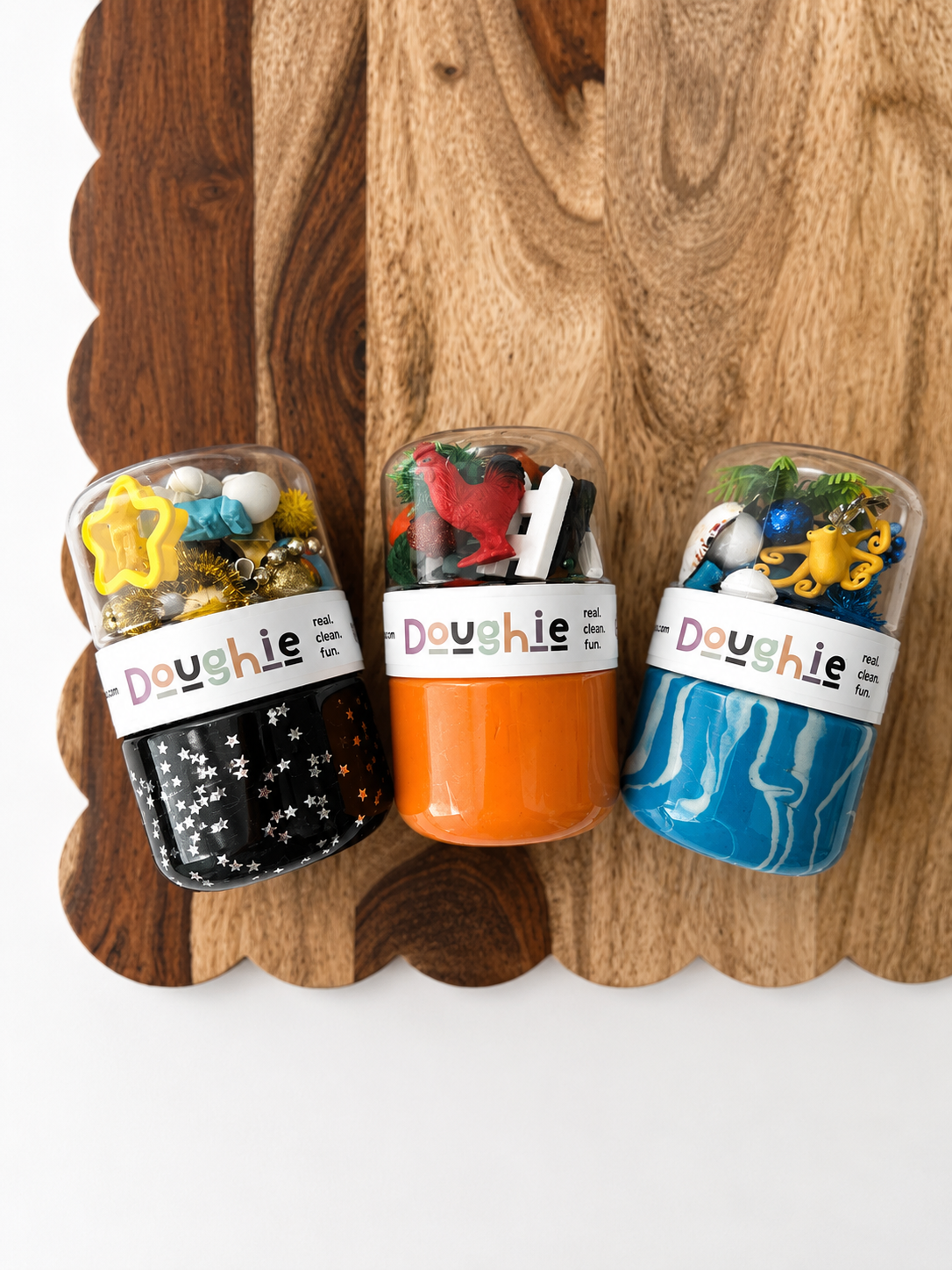
For many children, learning becomes more engaging when they can touch, create, build, and explore. Hands-on activities give students another way to practice new skills, explore concepts, and connect what they are learning to the world around them. That is where Doughie comes in.
Doughie creates handmade play dough and themed sensory kits that encourage creativity, exploration, and hands-on fun. Designed for little hands and big imaginations, Doughie gives families an easy way to incorporate sensory play into homeschool lessons, educational activities, and everyday learning.
From practicing early math skills to exploring science topics and creating imaginative worlds, play dough can be much more than a fun activity. With a little creativity, it can become a versatile tool for learning at home.
What Is Doughie?
Doughie is a sensory play brand offering handmade play dough, themed kits, and creative activity sets designed to inspire imaginative play and exploration.
With themes such as ocean, farm, space, dinosaurs, construction, unicorns, and more, Doughie gives children opportunities to create, experiment, and explore topics that interest them. Kits feature play dough and themed accessories that encourage children to build, shape, sort, and use their imaginations.
For homeschool families, the possibilities go far beyond playtime. Doughie can complement existing curriculum, reinforce concepts introduced in lessons, or provide a creative activity during the school day.
One of the best things about play dough is its flexibility. The same materials can be used in different ways depending on a child's age, interests, and learning goals.
Five Ways to Use Doughie for Homeschool Learning
1. Practice Early Literacy and Letter Recognition
Learning letters can become a hands-on experience when children can shape dough, form letters, and connect letters with their sounds.
Try incorporating play dough into activities that help your student:
Recognize uppercase letters and identify their sounds.
Form letters using rolled and shaped dough.
Practice spelling their name and simple words.
Connect letters with objects that begin with the same sound.
Build vocabulary by describing the objects and scenes they create.
Doughie's alphabet stampers offer another way to practice uppercase letter recognition and spelling. Pair them with a simple activity, such as stamping the first letter of a child's name or creating a short word to sound out together.
These activities provide an additional way to engage with early literacy skills while keeping little hands busy.
2. Make Math More Hands-On
Numbers and mathematical concepts can sometimes feel abstract to young learners. Play dough gives children something they can physically manipulate while exploring early math skills.
Use Doughie to practice:
Counting and number recognition.
Creating groups and comparing quantities.
Sorting objects by color, shape, or size.
Exploring patterns and sequences.
Recognizing and creating geometric shapes.
Practicing simple addition and subtraction.
Introducing fractions by dividing shapes into equal parts.
For example, ask your student to make four small dough balls and then add three more. Have them count the total and explain how they found the answer.
Older students can flatten a piece of dough into a circle and divide it into halves, thirds, or fourths to explore fractions visually.
The goal is to give children a tangible way to explore concepts while practicing problem-solving and mathematical thinking.
3. Strengthen Fine Motor Skills
Rolling, squeezing, pinching, flattening, and shaping play dough involve small movements that help children practice hand and finger coordination.
These movements are useful for developing skills involved in writing, drawing, manipulating small objects, and completing everyday tasks.
Try encouraging your student to:
Roll dough into long snakes or small balls.
Pinch off small pieces and combine them.
Flatten dough with their hands or a roller.
Press shapes and themed accessories into the dough.
Build objects using different sizes and shapes.
These activities can be especially useful for preschool and early elementary enrichment, giving children opportunities to practice coordination through creative play.
4. Bring Science and Themed Learning to Life
A themed sensory kit can be the starting point for an entire homeschool lesson.
An ocean-themed kit might lead to a discussion about marine animals, ocean habitats, and the differences between saltwater and freshwater. A farm-themed activity could introduce livestock, crops, and where food comes from. A space-themed kit could spark curiosity about planets, stars, and the solar system.
As your child creates, ask questions such as:
What do you notice about this animal or object?
Where does it live?
What does it need to survive?
How could you build its habitat?
What would happen if you changed the shape or structure?
You can extend the activity by reading a related book, watching an educational video, drawing a picture, or asking your student to explain what they learned.
This approach allows families to connect creative play with reading, science, vocabulary, and critical thinking.
5. Encourage Creativity and Problem-Solving
Not every homeschool activity needs a worksheet or a predetermined answer. Open-ended play gives children opportunities to make choices, experiment with ideas, and solve problems independently.
Invite your student to create a town, design a garden, build a pretend bakery, construct a dinosaur habitat, or invent something entirely new.
As they work, encourage them to describe what they are making and explain how they decided to build it.
You might ask:
What are you creating?
How did you decide to make it this way?
What could you change to make it stronger or taller?
Can you think of another way to solve that problem?
Can you tell me a story about what you created?
These simple conversations can support language development, imagination, planning, and problem-solving.
How to Incorporate Doughie Into Your Homeschool Routine
Adding hands-on learning to your homeschool day does not have to mean creating another elaborate lesson plan. Doughie can be used in several simple ways.
As a lesson supplement: Introduce a concept through your regular curriculum, then use play dough to practice it. After learning about shapes, for example, challenge your student to create each shape with dough.
As part of a themed unit: Choose a kit that complements what your child is studying. An ocean-themed activity can accompany a unit about marine life, while a farm kit can complement a lesson about agriculture or animals.
As an independent activity: Set out age-appropriate materials and give your child a creative challenge. This can provide an opportunity to practice independent decision-making and problem-solving.
As a learning break: Use a short sensory activity between structured lessons. A change of pace can give students an opportunity to reset before returning to their schoolwork.
As a multi-age activity: Use the same materials for different learning goals. A younger child might practice counting, while an older sibling creates patterns, works through simple equations, or writes a story about the scene they build.
The key is flexibility. Activities can be adjusted to suit your child's developmental stage, interests, and current learning objectives.
Supporting Different Learning Styles and Interests
Every child approaches learning differently. Some enjoy written assignments and structured lessons, while others are especially engaged by activities that allow them to build, manipulate objects, and explore concepts with their hands.
Hands-on activities provide another way to reinforce learning without replacing the curriculum or instruction families already use.
Younger students might focus on colors, shapes, counting, and letter recognition. Elementary students can explore spelling, patterns, basic equations, and science models. Parents can adapt activities to match their children's abilities and introduce more complex challenges as they grow.
Children also tend to be more engaged when activities connect to their interests. A child who loves dinosaurs might enjoy creating a prehistoric scene, while a student fascinated by the ocean may want to build an underwater world.
Doughie's variety of themes gives families a starting point for connecting sensory play with the topics their children already love.
Why Families Choose Doughie for Hands-On Play
Doughie combines handmade play dough with themed accessories and creative activity sets to make sensory play easy to incorporate into everyday life.
Families can choose from a variety of themes and use the materials for creative play, homeschool enrichment, quiet-time activities, or learning experiences built around a specific topic.
The materials can be revisited in new ways, too. A child might initially use a kit for imaginative play, then return to it later to practice counting, sorting, storytelling, or vocabulary.
Doughie is designed to encourage children to explore their ideas, create something of their own, and enjoy the process along the way.
Bring More Creativity Into Your Homeschool Day
Hands-on learning does not need to be complicated. Start with a subject your child enjoys, choose an activity that complements it, and let curiosity guide the experience.
Ask questions, encourage experimentation, and give your student room to create something of their own. Sometimes, meaningful learning happens when children have the opportunity to explore an idea rather than simply memorize an answer.
Doughie helps families make room for those moments through creative, hands-on sensory play.
Explore Doughie's handmade play dough, themed sensory kits, and creative activity sets to discover new ways to bring play and learning together.
Visit doughiejax.com to explore the collection and find your child's next hands-on activity.
Please note: Doughie play dough is intended for supervised play and is not food. Products containing small parts are not intended for children under three years of age. Select activities appropriate for your child's age and abilities.